
Release time: 2025-08-23 Number of views: 1121
In our embedded system projects, the RK3568 SBC has become a go-to platform for industrial, AIoT, and smart home applications. Its combination of performance, low power, and versatile interfaces makes it ideal for both prototypes and mass-produced products. In this article, I’ll walk you through our hands-on experience designing RK3568 SBCs—from initial concept to production-ready boards—highlighting lessons learned along the way.
Through multiple projects, we’ve refined a practical design workflow that balances performance, manufacturability, and reliability. Here’s how we approach it:
Understand the target application: industrial control, smart home, or edge AI.
Define performance needs: CPU/GPU load, memory size, storage type, and peripheral requirements.
Note early constraints such as enclosure dimensions and power budget.
Start from the RK3568 datasheet to ensure proper core connections.
Include power management and all peripheral interfaces: HDMI, LVDS, Ethernet, USB.
Pay attention to EMI mitigation and signal/power integrity—issues here often surface later during debugging.
From experience, a well-laid PCB avoids headaches later:
Use multi-layer boards for high-speed signals and proper power distribution.
Route differential pairs for MIPI and HDMI carefully, maintaining impedance matching.
Reserve space near CPU/GPU for heat sinks or metal layers to improve thermal performance.
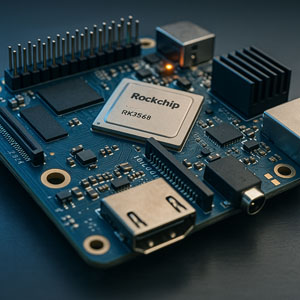
Debug the prototype step by step: CPU boot, memory test, peripheral initialization.
Load Linux or RTOS kernels and verify all drivers (USB, Ethernet, GPIO, etc.).
Measure power consumption and thermal behavior—sometimes what works on the bench fails in an enclosure.
Design enclosure dimensions with PCB layout in mind, especially thermal paths.
Choose materials and IP ratings based on the environment (metal or plastic, IP65/IP67).
Early communication with suppliers prevents last-minute mechanical conflicts.
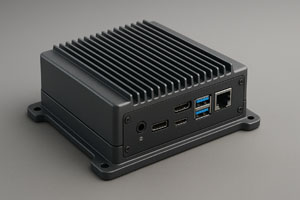
High-Speed Signals: Keep differential pairs short and impedance-matched.
Power Integrity: Multi-phase DC-DC regulators with strategically placed decoupling capacitors work best.
Thermal Layout: Place metal layers or heat sinks near high-power ICs to prevent throttling.
Interface Placement: Edge-mounted USB, HDMI, and Ethernet connectors make assembly and testing easier.
From our hands-on testing:
Kernel Selection: Linux 5.x series provides stable RK3568 support.
Driver Loading: Carefully test USB, Ethernet, GPIO, and other peripherals; sometimes minor tweaks improve stability.
Function Verification: Custom scripts help validate each interface systematically.
Low-Power Optimization: CPU frequency scaling and peripheral sleep modes help reduce thermal stress.
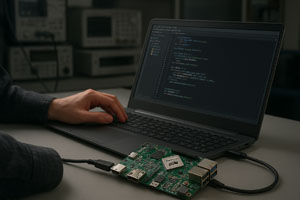
Material Choice: Aluminum works well for industrial applications; engineering plastics are lighter but need careful thermal consideration.
Thermal Design: Combine passive cooling with copper sheets or small heat sinks; fanless solutions reduce maintenance.
Interface Alignment: Double-check connector locations against the PCB before finalizing the enclosure.
Early Supplier Feedback: Share PCB drafts early to catch potential conflicts with mounting or heat dissipation.
Designing a robust RK3568 SBC is more than following datasheets—it’s about iterative prototyping, careful PCB layout, driver testing, and practical enclosure considerations. In our experience, attention to these details reduces unexpected issues in production and results in reliable products for industrial and AIoT markets.
If you’re looking for RK3568 SBC hardware design, kernel/driver support, or enclosure collaboration, our team can provide practical, hands-on guidance from prototype to mass production.

Keep up with our evolving product features and technologies. Enter your email and subscribe to our newsletter.

Copyright © 2020 https://www.embsom.com/